Car Seats and Florida Law: Booking a Miami Car Service With Children
Florida's car seat law exempts chauffeured vehicles for hire. Its seat belt law does not. Both facts matter, and most pages only tell you one of them
Parents ask this before they ask anything else, and they are right to.
The answer has two halves, and most of the pages you will find online get one of them wrong. Florida law treats a chauffeured car differently from your own car — but not in the way people assume, and not in every respect. Two separate statutes apply, and only one of them contains an exemption.
Here is what the law actually says, and what we think you should do about it.
What Florida requires in a private car
The child restraint statute is Florida Statute 316.613. In a normal passenger vehicle it sets two brackets:
- Children aged three and under must be in a separate carrier or the vehicle manufacturer’s integrated child seat.
- Children aged four and five must be in a separate carrier, an integrated child seat, or a booster seat.
There are narrow exceptions in the four-to-five bracket — where a seat belt is used and the child is being driven gratuitously by someone outside the immediate family, in a medical emergency, or where a documented medical condition requires it.
Getting it wrong is not a parking ticket. A violation is a moving violation with three points assessed against the driver’s licence, though a court may waive the penalty if the driver completes an approved child restraint safety program.
The exemption almost nobody knows about
Now the part that surprises people. The same statute says, word for word:
The child restraint requirements imposed by this section do not apply to a chauffeur-driven taxi, limousine, sedan, van, bus, motor coach, or other passenger vehicle if the operator and the motor vehicle are hired and used for the transportation of persons for compensation.
Read that carefully, because it is doing something specific. A chauffeured sedan, hired and paid for, sits outside the car seat requirement. So does a taxi, an SUV, a Sprinter van, a motor coach.
That is the honest legal answer to the question in the title: no, Florida does not require a car seat in a chauffeured vehicle for hire.
We would rather you heard that from us, accurately, than found a half-version of it somewhere else. But it is not the end of the answer, and anyone who stops there is telling you less than you need.
The seat belt law is a different statute, and it does not exempt us
This is the half that almost every page misses.
Seat belts are governed by Florida Statute 316.614, not 316.613. It requires that every passenger under the age of eighteen be restrained by a safety belt or a child restraint device. Its exemptions are narrow and occupational — newspaper delivery, solid waste collection, postal carriers. There is no taxi, limousine, or chauffeur-driven exemption in that section.
So the two statutes together produce a result that is easy to state and easy to get wrong:
- In a chauffeured car, the car seat requirement does not apply.
- The seat belt requirement still does. Every passenger under eighteen must be restrained.
A four-year-old riding on a lap, or sitting on the seat unbelted, is not covered by the exemption. Nothing exempts that.
Why we recommend a seat anyway
An exemption is a decision about liability. It is not a statement about physics.
A seat belt is engineered around an adult skeleton — a pelvis wide enough to anchor a lap belt, a collarbone in the right place for the shoulder strap. Small children do not have that geometry yet. The lap belt rides up onto the abdomen instead of sitting across the hip bones, and the shoulder belt crosses the neck. In a sudden stop those two facts are the whole problem, and the car being black and professionally driven does not change either of them.
NHTSA’s guidance does not have a chauffeur exception either. In short form:
- Under one year old: always rear-facing.
- One to three: stay rear-facing until the child reaches the top height or weight allowed by the seat’s manufacturer.
- Four to seven: forward-facing with a harness and tether until the seat’s top limit, then a booster.
- Eight to twelve: a booster until a seat belt fits properly on its own.
The fit test is worth memorising, because it is the actual standard rather than a birthday: the lap belt should lie snugly across the upper thighs and not the stomach, and the shoulder belt should lie across the shoulder and chest without crossing the neck or face. NHTSA also recommends keeping children in the back seat at least through age twelve — which, in a chauffeured car, is where they are sitting anyway.
Our position is straightforward. The law gives us an exemption. We would still rather your child travelled in an appropriate restraint, and we would rather plan for it in advance than have the conversation at the kerb.
The airport problem
This is where it gets practical, and where the theory tends to collide with a real Tuesday.
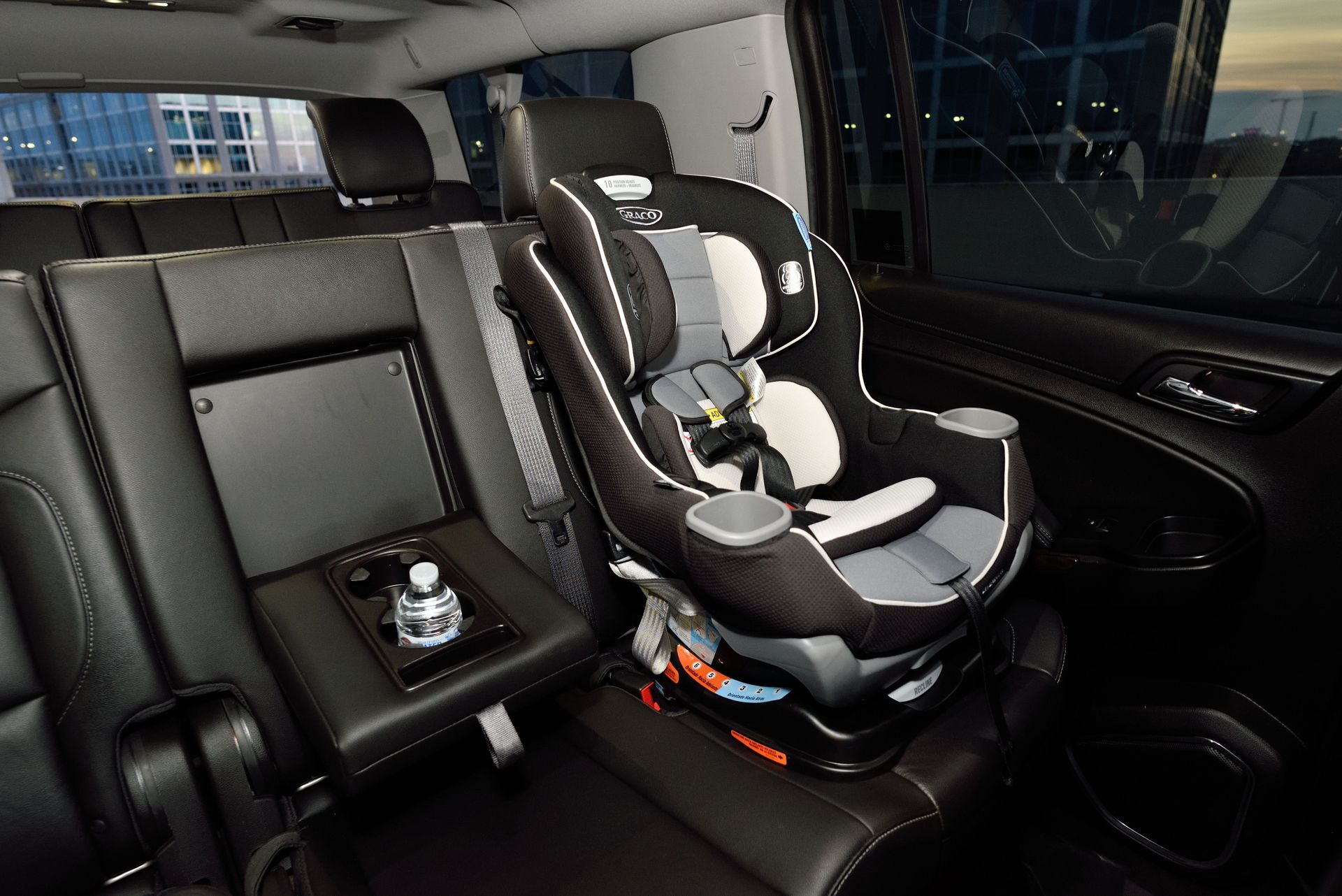
You land at MIA or Fort Lauderdale with a three-year-old. Your own car seat is either checked baggage that has not appeared yet, or it is at home because you did not want to carry it through two airports. Rideshare drivers are not required to carry seats and, as a rule, do not — the car that accepts your trip is whatever car accepts your trip.
Three things make that morning easier, in rough order of how much they help:
- Say it when you book, not when you land. A seat is a planning problem hours ahead and a crisis fifteen minutes ahead. The ages of the children change which vehicle is sent.
- Count the seats against the vehicle, not the headcount. Two car seats plus luggage is not a sedan. Car seats consume rear bench space that a passenger count does not capture.
- If you are travelling with your own seat, say so too. It changes the luggage arithmetic, and it means the chauffeur is not waiting while a seat is unpacked from a case.
What to tell us when you book
Whether you are booking with us or with anyone else, the information that actually determines what shows up is short:
- The age of each child — not just how many passengers. Three and seven are different answers.
- Whether you are bringing your own seats, and how many.
- What you need supplied, if anything — ask, and get the answer confirmed before the day rather than assumed.
- Luggage, honestly counted, including the stroller.
- The flight number for anything touching an airport.
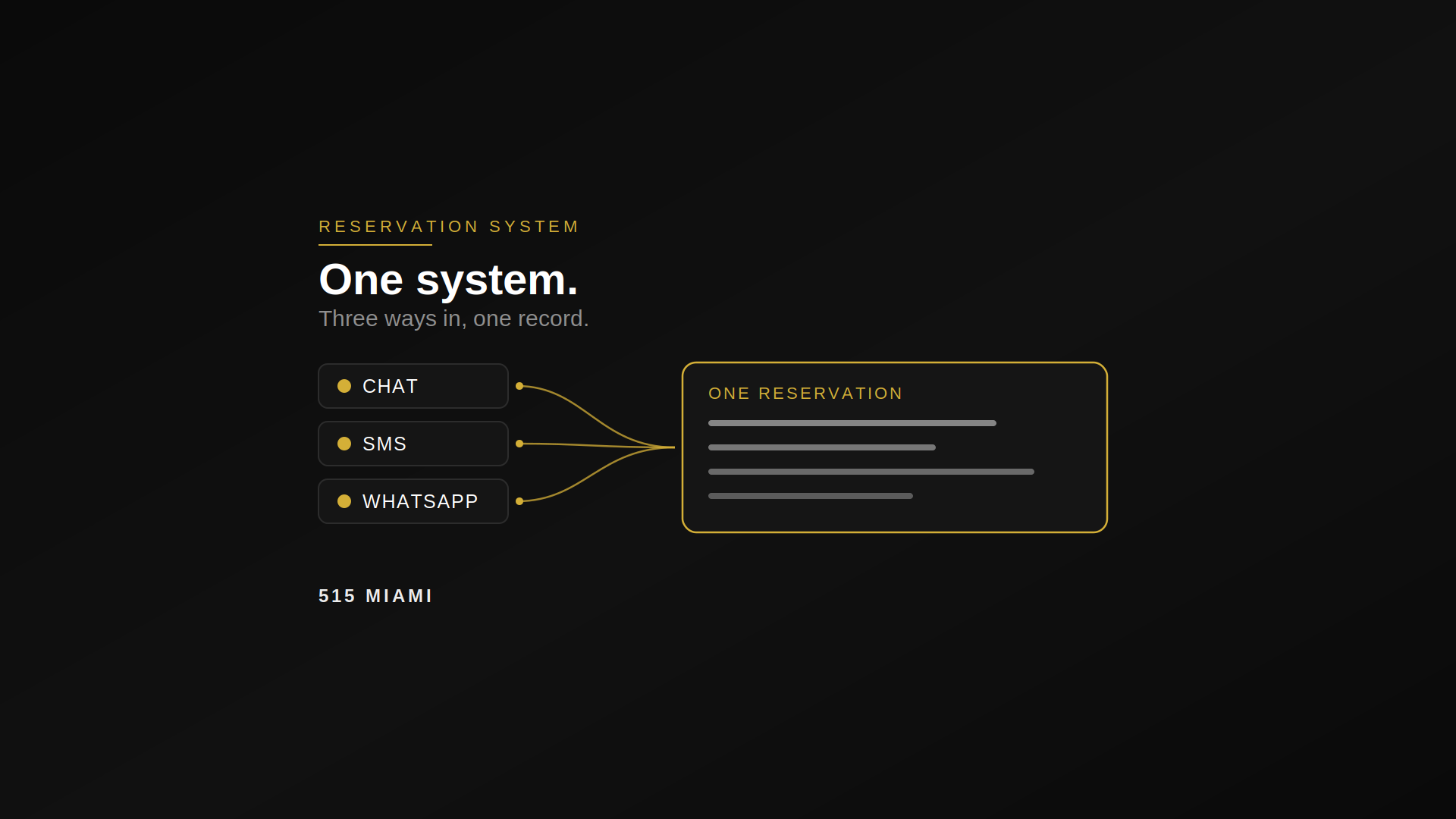
You can send all of that in one message. The website, SMS and WhatsApp all reach the same booking system on +1 (305) 676-8127, and all three quote and confirm on the spot rather than putting you in a queue. WhatsApp works from anywhere in the world over Wi-Fi, which is the useful one if you are arranging a Miami arrival from abroad.
One last note, and we mean it plainly: this is a description of what two Florida statutes say, not legal advice, and we are not lawyers. Both are published in full by the Florida Senate and worth reading yourself if the detail matters to your situation. If you want the specific texts, they are sections 316.613 and 316.614.
The exemption is real. We would just rather you knew about the other statute too, and made the decision with the whole picture in front of you.
Need a chauffeur in South Florida?
Airport transfers, corporate travel, cruise ports, and events — with flight tracking and chauffeurs who arrive early. Available 24/7 across Miami, Fort Lauderdale, and Palm Beach.