Choosing a Miami Event Transportation Company
A gala at Brickell City Centre, a convention near Miami Beach, a wedding in Coral Gables, and executive arrivals through Opa-locka can all happen on the same weekend. That is exactly why choosing the right miami event transportation company is less about finding a car and more about securing an operation that can handle timing, access points, guest movement, and last-minute changes without losing control.
In South Florida, event transportation has very little margin for error. Roads back up quickly, venue loading rules change, airports run on their own rhythm, and groups rarely move as neatly as an itinerary suggests. For clients planning corporate programs, private celebrations, or VIP travel, the transportation partner matters because it shapes the guest experience before anyone steps into the venue.
What a Miami event transportation company should actually manage
A true event transportation provider does more than assign vehicles. It should be able to build a transportation plan around your event's schedule, guest count, pickup geography, security needs, and service standard.
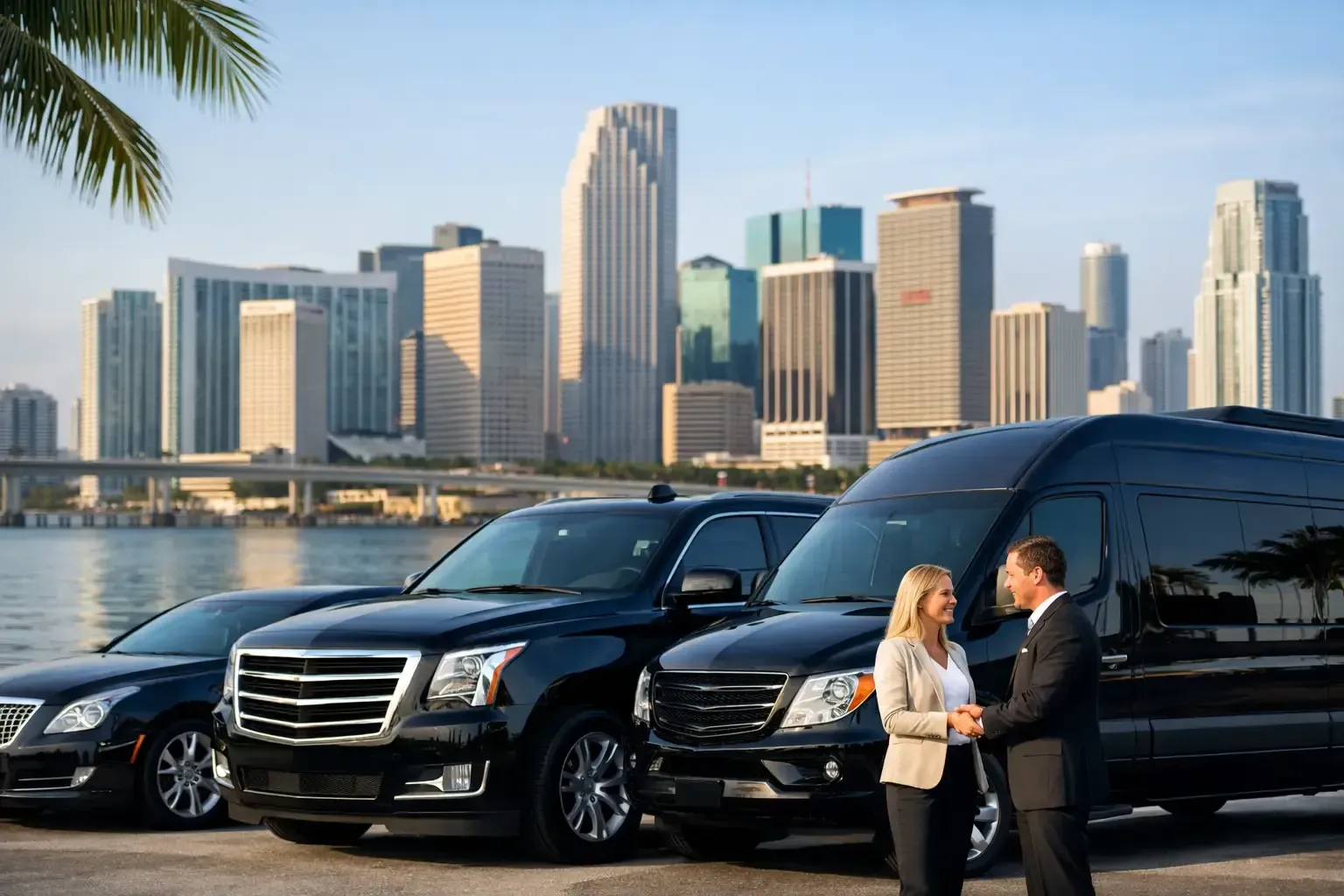
That starts with matching the right vehicle to the job. An executive sedan may be ideal for keynote speakers or senior leadership, while luxury SUVs work better for small groups with luggage or privacy requirements. Sprinter vans can simplify hotel-to-venue transfers for medium-sized groups, and motorcoaches become necessary when moving large attendee volumes on fixed schedules. When one company can cover those needs under a single operating standard, coordination becomes far easier.
Just as important is dispatch oversight. A polished vehicle means very little if chauffeurs are not staged correctly, flight arrivals are not monitored, or route timing is based on assumptions rather than real traffic behavior. Event transportation in Miami demands active management, not passive scheduling.
Why Miami event transportation is different from ordinary group travel
Miami looks straightforward on a map. In practice, it is a complex transportation environment shaped by airport congestion, port traffic, causeway bottlenecks, seasonal tourism, major conventions, and venue-specific access rules.
An event transfer to Miami Beach may require careful timing around bridge traffic. A pickup at MIA can change if baggage delays, customs processing, or terminal congestion shifts the timeline. A cruise passenger transfer may need coordination around PortMiami traffic surges that happen within narrow embarkation windows. If your guests are arriving through private aviation terminals, FBO procedures add another layer of timing and communication.
This is where premium chauffeured service separates itself from standard ride options. A rideshare app may work for a casual dinner reservation. It is not built to coordinate staggered airport arrivals for a board meeting, manage a wedding shuttle schedule across multiple locations, or keep a 30-person guest manifest moving on time during a citywide event weekend.
The service standard guests notice first
Most guests will not ask how the transportation operation is structured. They will notice whether the experience feels controlled.
They notice whether the chauffeur arrives early, whether the vehicle is clean and properly sized, and whether pickup instructions are clear. They notice whether airport meet-and-greet service avoids confusion after a long flight. They notice whether a wedding party moves calmly from hotel to ceremony instead of rushing because the transportation plan was too thin.
For corporate clients, the standard is even higher. Executives expect quiet, privacy, and chauffeurs who understand discretion. They also expect the provider to know where to stage, which entrance matters, and how to adjust when a meeting runs over. Good event transportation should feel composed, even when the logistics behind it are complicated.
How to evaluate a Miami event transportation company
The strongest providers are operational businesses first and luxury brands second. Both matter, but logistics must come first.
Start with fleet depth. If your event requires a mix of sedans, SUVs, Sprinters, and larger group vehicles, ask whether the company runs that fleet directly or relies heavily on outside sourcing. Direct control usually leads to better consistency in vehicle condition, service standards, and communication.
Then look at chauffeur quality. Licensed, insured, professionally trained chauffeurs are essential, especially for executive travel, weddings, and VIP events. Local knowledge also matters. Miami is a market where knowing airport pickup procedures, restricted hotel drive lanes, convention center access points, and event venue staging zones can save significant time.
You should also ask how the company handles live changes. Flight tracking, direct dispatcher communication, manifest updates, and real-time schedule adjustments are not premium add-ons. For event transportation, they are part of the baseline requirement.
Airport and private aviation coordination for event arrivals
Many event programs begin before the event itself, at the airport curb or private terminal.
Guests arriving into MIA, FLL, or PBI often have different baggage timelines, different arrival terminals, and different expectations. A well-run transportation plan accounts for all of it. Real-time flight tracking allows dispatch to adjust for early arrivals, delays, and gate changes. Meet-and-greet service reduces confusion for travelers unfamiliar with the airport. For families or senior travelers, that extra support can make the arrival process materially easier.
Private aviation clients require a more exact approach. FBO pickups depend on permissions, timing, tail number monitoring, and direct communication. That environment calls for a transportation partner that understands aviation-side coordination rather than treating it like a standard curbside pickup.
For events with multiple inbound guests, airport logistics are often the first proof point that the provider is either truly prepared or simply hoping the schedule holds.
Group transportation without the usual friction
Large-group movement is where weak planning gets exposed quickly. A single late shuttle can ripple into delayed check-ins, missed ceremony starts, or a ballroom that fills unevenly because guests arrived in waves instead of on schedule.
A capable miami event transportation company should be able to map movement in practical terms. That means understanding how many passengers each vehicle can carry comfortably, how much luggage space is needed, how many loading cycles a venue can accommodate, and whether staggered departures are more efficient than trying to move everyone at once.
There is always a trade-off between luxury and throughput. A fleet of SUVs offers a more private, executive-style experience, but motorcoaches may be the smarter decision for large conference groups moving on a fixed route. Sprinters often sit in the middle, offering premium presentation with better group efficiency. The right answer depends on the event's priorities, budget, and timing tolerance.
Weddings, corporate events, and VIP programs require different planning
Not every event should be approached the same way.
Wedding transportation is usually built around emotion, timing, and guest reassurance. Couples need confidence that family members, wedding parties, and VIP guests will arrive where they need to be without constant phone calls. Padding the timeline matters here. So does having the right mix of ceremony transport, reception transfers, and late-night departures.
Corporate transportation tends to be less visible but more schedule-sensitive. Executives may need individual airport transfers, while attendees require shuttle loops between hotels and venues. Hospitality teams often need direct access to dispatch for changes. The transportation partner should be comfortable working inside a larger event operations framework.
VIP nightlife and private event service involve a different set of expectations. Privacy, security awareness, and flexible timing usually matter more than rigid route schedules. The vehicles should reflect the setting, but the greater value is in controlled movement and chauffeur professionalism.
Why direct booking matters more than most clients realize
Many transportation problems begin with fragmentation. One party handles the booking, another supplies the vehicle, someone else dispatches the chauffeur, and no one has full accountability once the event starts.
Direct booking with the operating company reduces that risk. It creates a clearer chain of communication and gives clients a single source for confirmations, updates, and changes. If the provider also maintains its own fleet and manages chauffeurs internally, the service tends to be more consistent from reservation to final drop-off.
For high-value events, that structure is not just convenient. It is part of risk management.
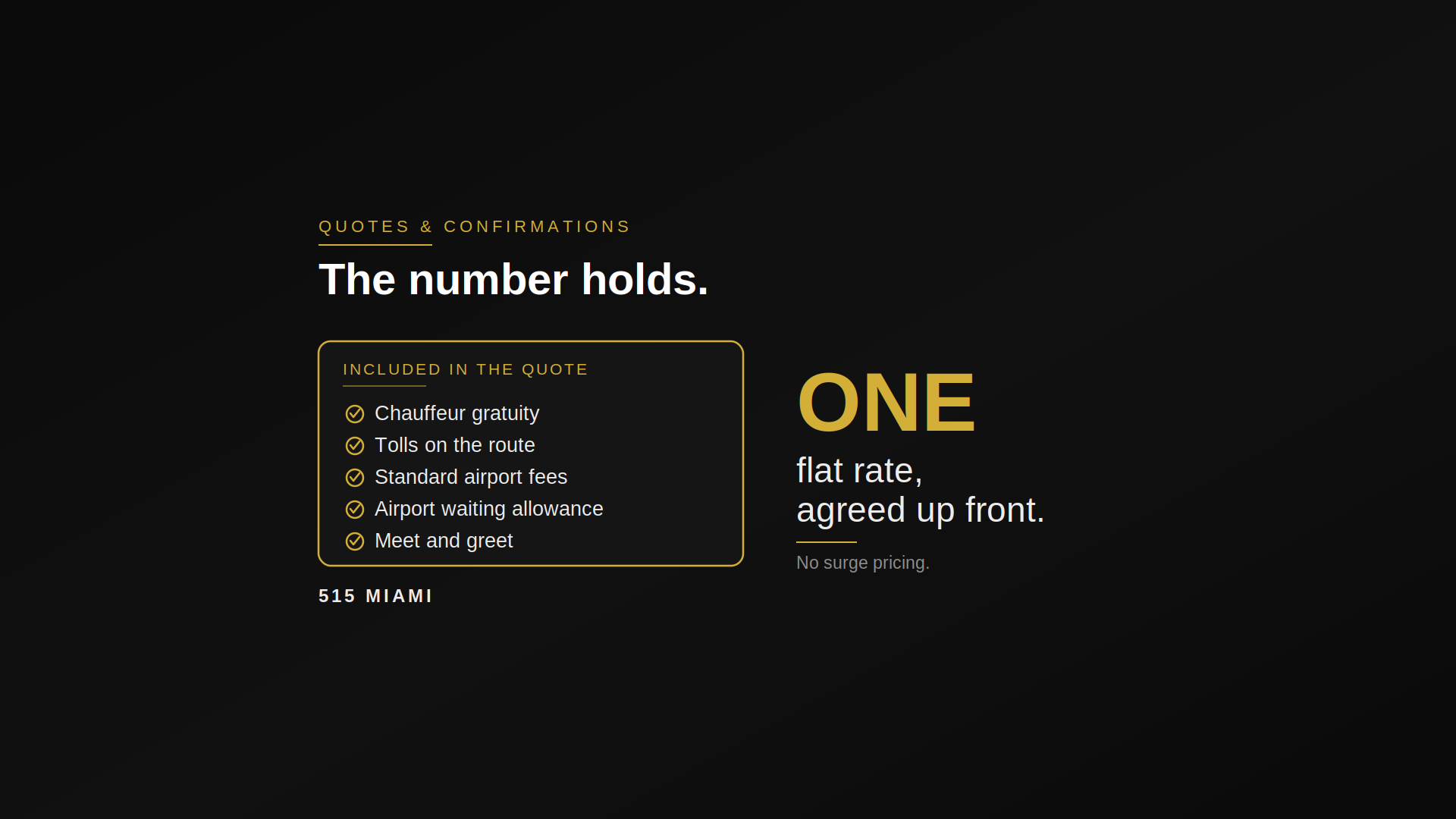
One company that reflects this higher operating standard is 515 MIAMI, which combines luxury fleet options with active dispatch oversight, airport coordination, and large-group event capability across South Florida.
The right choice is usually the company asking better questions
The best transportation partner will not rush to quote a vehicle before understanding the event. They will ask where guests are arriving, how many luggage pieces are expected, whether venue staging is restricted, who requires meet-and-greet service, what level of privacy matters, and how flexible the schedule really is.
Those questions are a good sign. They show the company is thinking like an operator, not just a seller of cars.
When transportation is planned correctly, guests simply experience a well-run event. They arrive on time, in comfort, and without confusion. That result may look effortless from the outside, but in Miami, it almost never happens by accident.
Need a chauffeur in South Florida?
Airport transfers, corporate travel, cruise ports, and events — with flight tracking and chauffeurs who arrive early. Available 24/7 across Miami, Fort Lauderdale, and Palm Beach.