How to Plan Cruise Transfers Without Delays

A cruise departure can unravel before you see the ship. A delayed flight into Miami, an oversized luggage load, or a driver unfamiliar with PortMiami traffic patterns can turn a carefully planned vacation into a rushed curbside handoff. Knowing how to plan cruise transfers means treating the ground portion of your trip with the same care as your cabin, flights, and embarkation documents.
For South Florida sailings, the right transfer plan accounts for airport timing, hotel location, passenger count, luggage, mobility needs, and the cruise line’s required boarding window. The goal is simple: arrive composed, with enough time to check bags, clear security, and begin the voyage without watching the clock.
Start With Your Cruise Terminal and Boarding Window
PortMiami serves multiple terminals, and the correct terminal depends on your cruise line and sailing date. Do not assume every ship uses the same drop-off point from one season to the next. Confirm your terminal address and assigned arrival time directly from your cruise documents shortly before departure.
Most cruise lines issue a check-in or arrival window, followed by a firm all-aboard deadline. Those are not the same thing. Your transportation should be scheduled around the earlier arrival window, not the last possible moment to board. Terminal access, baggage porter lines, security screening, and passenger volume can all add time before you reach the ship.
A private transfer should generally target arrival 30 to 45 minutes before your scheduled terminal check-in window when practical. This creates room for roadway congestion or an unexpected delay at the airport, without placing you at the terminal so early that staff cannot accept your luggage.
How to Plan Cruise Transfers Around Your Flight
Same-day flight arrivals require a conservative plan. Miami International Airport is close to PortMiami in ideal conditions, but airport exits, baggage claim, construction, tunnel approaches, and terminal traffic can change the actual drive significantly. Fort Lauderdale-Hollywood International Airport adds more distance and greater exposure to highway conditions. Palm Beach International Airport requires even more lead time.
If your cruise departs the same day, choose a flight that lands early enough to absorb ordinary travel disruption. A morning arrival is usually far more sensible than one scheduled just a few hours before embarkation. The issue is not only the flight itself. You still need to deplane, collect checked luggage, meet your chauffeur, and travel to the correct terminal.
For travelers arriving the day before, an overnight stay near Brickell, Downtown Miami, Miami Beach, or the airport can make embarkation morning considerably easier. It also creates a useful buffer if a flight is delayed, canceled, or rerouted. This is especially valuable for families, international guests, and groups coordinating arrivals from several cities.
A professional chauffeur service should use live flight tracking for airport pickups, then adjust dispatch timing when an inbound flight moves. Still, flight tracking does not replace a sound itinerary. A late-afternoon landing on embarkation day leaves little room for any provider, no matter how well organized.
Airport pickup details that prevent confusion
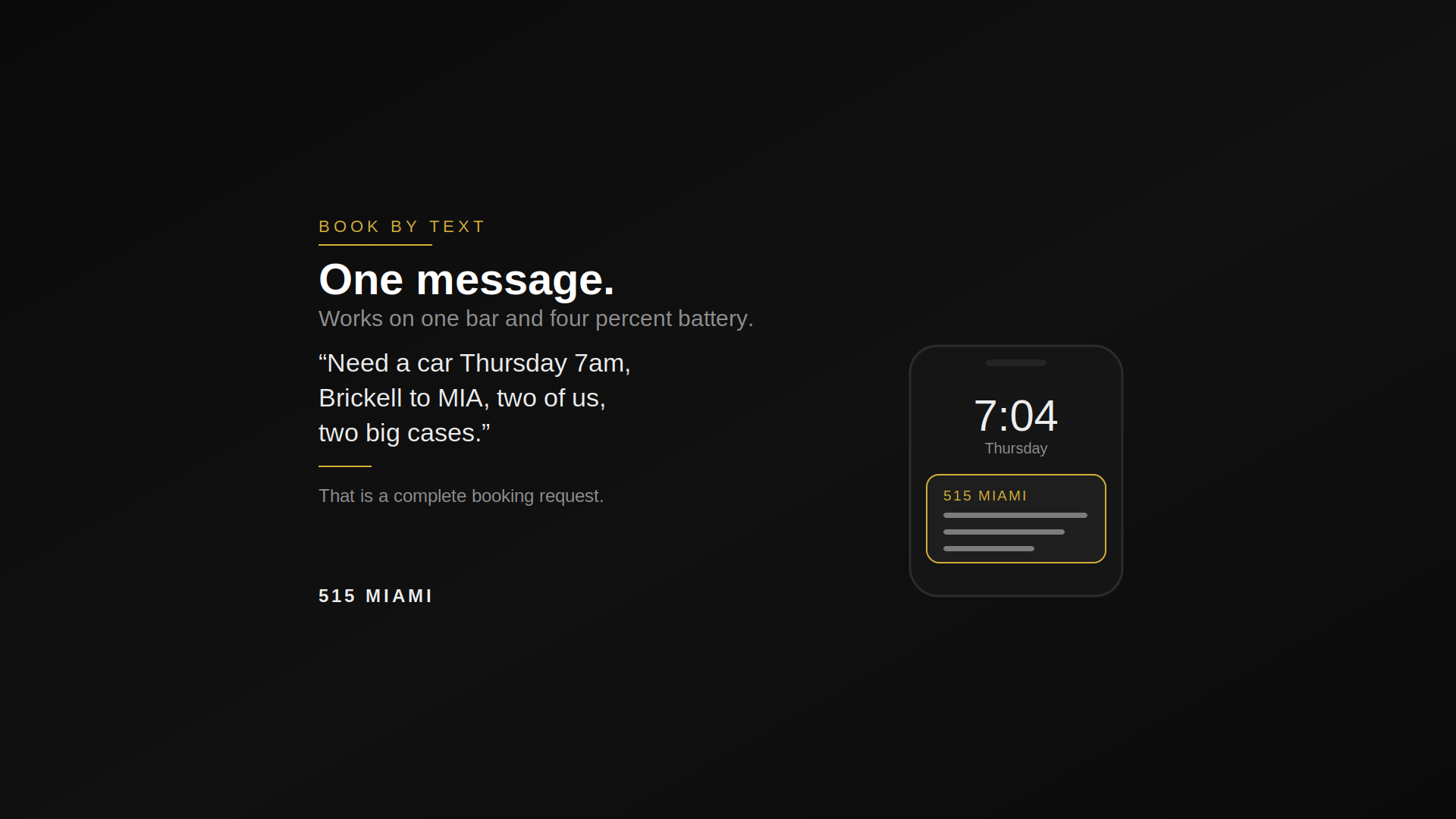
Share the flight number, airline, date, airport, passenger count, and mobile contact for the lead traveler when booking. If you have checked bags, allow time for baggage claim rather than scheduling pickup based only on the published landing time.
Meet-and-greet service can be particularly helpful at MIA for first-time visitors, elderly travelers, families with children, and guests carrying multiple bags. Instead of searching for a pickup zone after a long flight, passengers can meet a designated representative and proceed directly to the vehicle. Private aviation travelers should also provide FBO details, since access and pickup procedures differ from commercial terminals.
Choose a Vehicle for People and Luggage, Not Just Seats
Cruise travelers often underestimate luggage. Formal nights, warm-weather clothing, beach gear, garment bags, strollers, mobility equipment, and cases of water or wine can quickly exceed the cargo capacity of a standard sedan.
The appropriate vehicle depends on the full travel party and the bags they bring. An executive sedan suits one or two passengers with restrained luggage. A luxury SUV is often the better choice for a family of four or a couple traveling with larger suitcases. Mercedes Sprinter vans provide a more comfortable solution for extended families or groups who want to ride together, while limo Sprinters can add space and a more elevated arrival experience. For large wedding parties, corporate incentive groups, or multi-family cruise departures, a motorcoach may be the most practical option.
Do not book based on seating capacity alone. Tell your transportation coordinator the number of large suitcases, carry-ons, golf bags, strollers, wheelchairs, or other oversized items. A vehicle that technically seats six may not accommodate six cruise passengers with two full-size cases each. The better choice may be a larger vehicle, a luggage trailer where appropriate, or coordinated multi-vehicle service.
Build a Realistic Embarkation-Day Schedule
Your pickup time should work backward from the terminal arrival time, not forward from a preferred breakfast reservation. Start with your cruise line’s assigned check-in window, then add expected drive time and a traffic cushion. Add more time for pickups from Miami Beach, Fort Lauderdale, Boca Raton, or Palm Beach, particularly during morning rush hour, major conventions, sporting events, and holiday weekends.
Hotel pickups have their own operational details. Confirm the exact hotel entrance, not simply the property name. Larger resorts and high-rise hotels may have separate valet, lobby, and group entrance areas. If your party is staying in different hotels, decide whether one vehicle should make multiple pickups or whether separate departures are more efficient. A few minutes saved on the map can become twenty minutes lost in hotel driveways and loading zones.
For groups, appoint one lead traveler to communicate with the chauffeur or transportation coordinator. This person should have the confirmation details, terminal information, passenger count, and the authority to confirm that everyone is ready. Group travel works best when the vehicle can depart on schedule rather than waiting while individual guests settle last-minute luggage questions.
Understand the Trade-Offs Between Transfer Options
Cruise-line transfers can be convenient because they are packaged with the sailing and may offer a familiar process. However, they commonly operate on fixed schedules, may involve waiting for other passengers, and do not always provide the privacy or vehicle flexibility that premium travelers expect.
Rideshare can appear convenient at first, but availability, vehicle quality, luggage capacity, cancellation risk, and port pickup restrictions can make it unreliable for a time-sensitive departure. The lowest price is rarely the relevant measure when a missed boarding window can affect an entire vacation.
A reserved private car service is designed for a different standard: a confirmed vehicle, a trained chauffeur, direct routing, luggage-aware vehicle selection, and a schedule built around your party. It is especially useful when you are traveling with children, older relatives, a large group, or clients whose experience reflects on your organization.
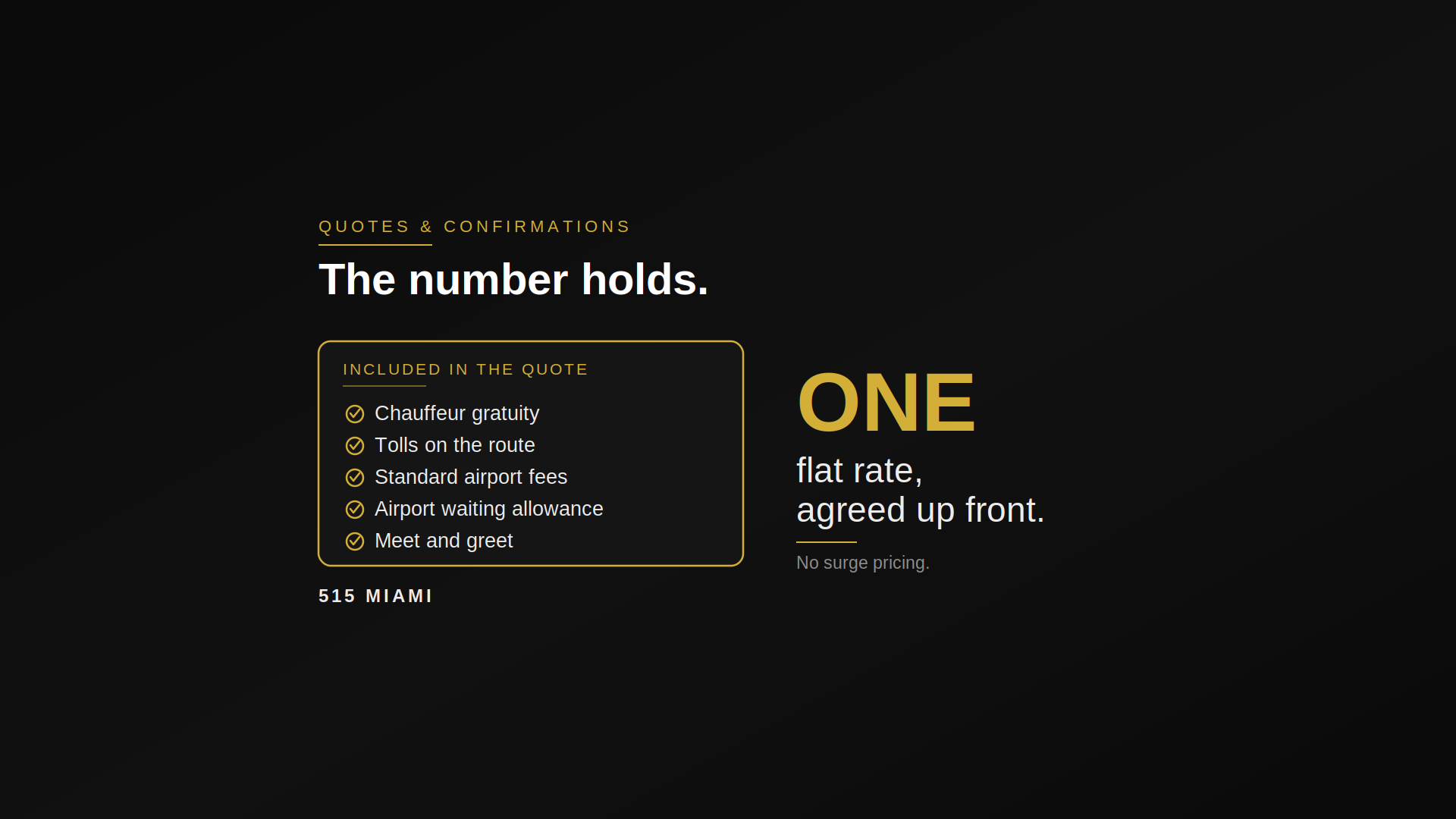
515 MIAMI coordinates airport, hotel, and cruise port transportation across South Florida with a luxury fleet under one service standard. That matters when one itinerary includes multiple pickup points, flight monitoring, child seats, or a group that cannot afford to split into uncertain vehicles.
Plan the Return Transfer Before You Sail
Disembarkation is not a simple reverse of embarkation. Ships clear passengers in stages, customs procedures can affect timing, and terminal pickup zones may be busy with private vehicles, taxis, buses, and waiting families. Reserve your return transportation before the cruise, especially during peak sailing periods.
Provide the ship name, return date, terminal, anticipated disembarkation time, flight departure time, and airline information. For a flight home, allow for ship clearance, luggage collection, customs, the drive to the airport, bag-drop deadlines, and airport security. International flights generally require more margin than domestic departures.
If you have a late flight, consider an hourly chauffeur arrangement rather than waiting at the airport for hours. Depending on your interests, that time can be used for a relaxed breakfast, shopping, a private city tour, or a business meeting before airport drop-off. Keep luggage capacity in mind if sightseeing is part of the plan.
Confirm the Details 24 to 48 Hours Before Travel
A short confirmation review prevents most transfer errors. Recheck the cruise terminal, flight details, hotel pickup entrance, passenger phone numbers, luggage count, vehicle type, child seat requirements, and any mobility accommodations. For groups, reconfirm the final headcount. One additional passenger can change the vehicle plan.
It is also wise to keep cruise documents, passports or identification, medication, and a change of clothes in a carry-on rather than in luggage handed to the porters. Your chauffeur can assist with orderly loading, but essential travel items should stay with you until you board.
The best cruise transfer feels almost uneventful: your vehicle arrives as scheduled, the luggage fits, the route is already understood, and you step out at the correct terminal ready to start your vacation. That calm is not accidental. It is the result of planning for the parts of travel most people notice only when they go wrong.
Need a chauffeur in South Florida?
Airport transfers, corporate travel, cruise ports, and events — with flight tracking and chauffeurs who arrive early. Available 24/7 across Miami, Fort Lauderdale, and Palm Beach.