Landed Early, Delayed, or Diverted: How Flight Tracking Changes Your Pickup
What happens to your car when the schedule does not survive contact with the airline
The pickup time you give when you book an airport transfer is a prediction about the future, made by an airline, weeks in advance. Roughly one flight in four does not honour it.
That is not a complaint about airlines. It is the actual operating condition of every airport transfer, and it is the entire reason flight tracking exists. What follows is what tracking really watches, and what happens to your car in the three situations that break a schedule: landing early, landing late, and landing somewhere else entirely.
"On time" does not mean what most people think
The US Bureau of Transportation Statistics counts a flight as on time if it arrives less than 15 minutes after the scheduled time in the airline's reservation system. Two things follow from that definition, and both matter for ground transportation.
First, "on time" already contains up to a quarter of an hour of slippage. Second, and less well known: arrival performance is measured when the aircraft reaches the gate — not when the wheels touch, and certainly not when you reach the curb.
In March 2026, the Department of Transportation's Air Travel Consumer Report put marketing-carrier on-time arrivals at 73.4%. Cancellations ran 2.9%. Diversions accounted for 2,317 flights, or 0.34% of operations.
So on a normal month, better than one arrival in four is at least fifteen minutes late to the gate, and about one flight in three hundred lands at an airport nobody planned for. A pickup arrangement that assumes the schedule is a fact will be wrong regularly.
What flight tracking actually watches
Tracking is not someone refreshing a departures board. A flight number is a key into live operational data: whether the aircraft has pushed back at origin, whether it is airborne, where it is en route, its revised estimate, and when it actually blocks in at the gate.
This is why a flight number is worth more to a dispatcher than a landing time. A landing time is a static number you typed into a form. A flight number is a live object that updates itself. Give us "AA1425 from Dallas" rather than "arriving around 6 p.m." and the booking corrects itself without anyone making a phone call.
Scenario one: you land early
Early arrivals get almost no attention and cause a surprising number of problems.
Tailwinds, a light load, or an early pushback can put you on the ground twenty or thirty minutes ahead of schedule. It feels like a win, and then you are standing at a curb with your bags wondering where the car is.
Honest version: early can be harder to absorb than late. A vehicle scheduled around your original time may be finishing another job. Tracking is what makes it manageable — dispatch sees the revised estimate while you are still airborne and repositions rather than discovering the problem when you call.
There is also a quirk worth knowing: an early aircraft sometimes waits on the ramp because its gate is still occupied. You can be on the ground for fifteen minutes and not yet "arrived" by any measure the airline reports. Tracking sees that too.
Scenario two: you are delayed
This is the common case, and the one tracking handles most cleanly.
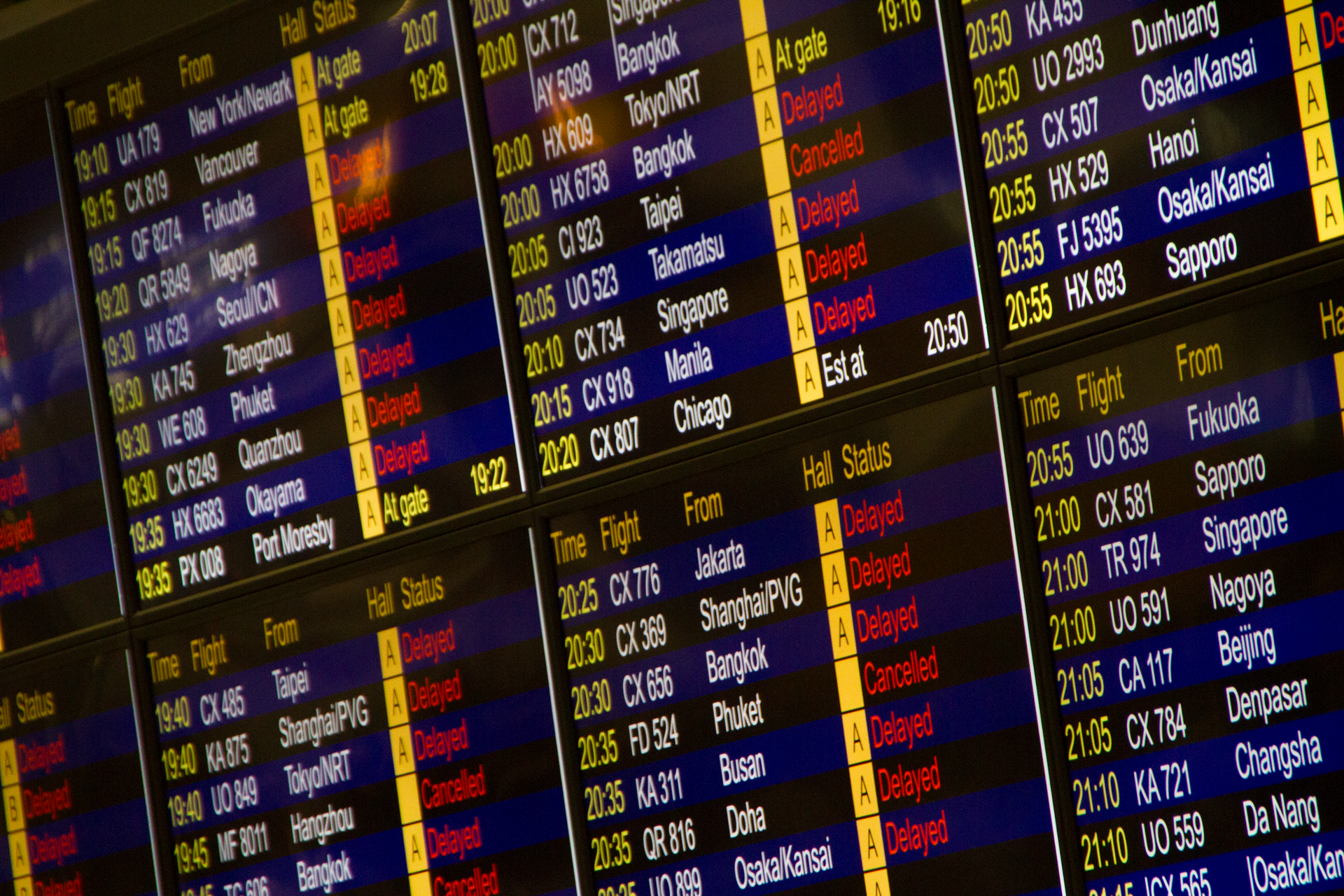
Delays are not one thing. A departure delay at origin is visible hours ahead and easy to plan around. An en-route slowdown or a holding pattern shows up late. A taxi-in delay after landing — gate congestion, a ground stop — happens after the flight technically arrived. Late-arriving aircraft, meaning your plane was late getting to you from its previous leg, is consistently one of the largest delay categories the DOT reports.
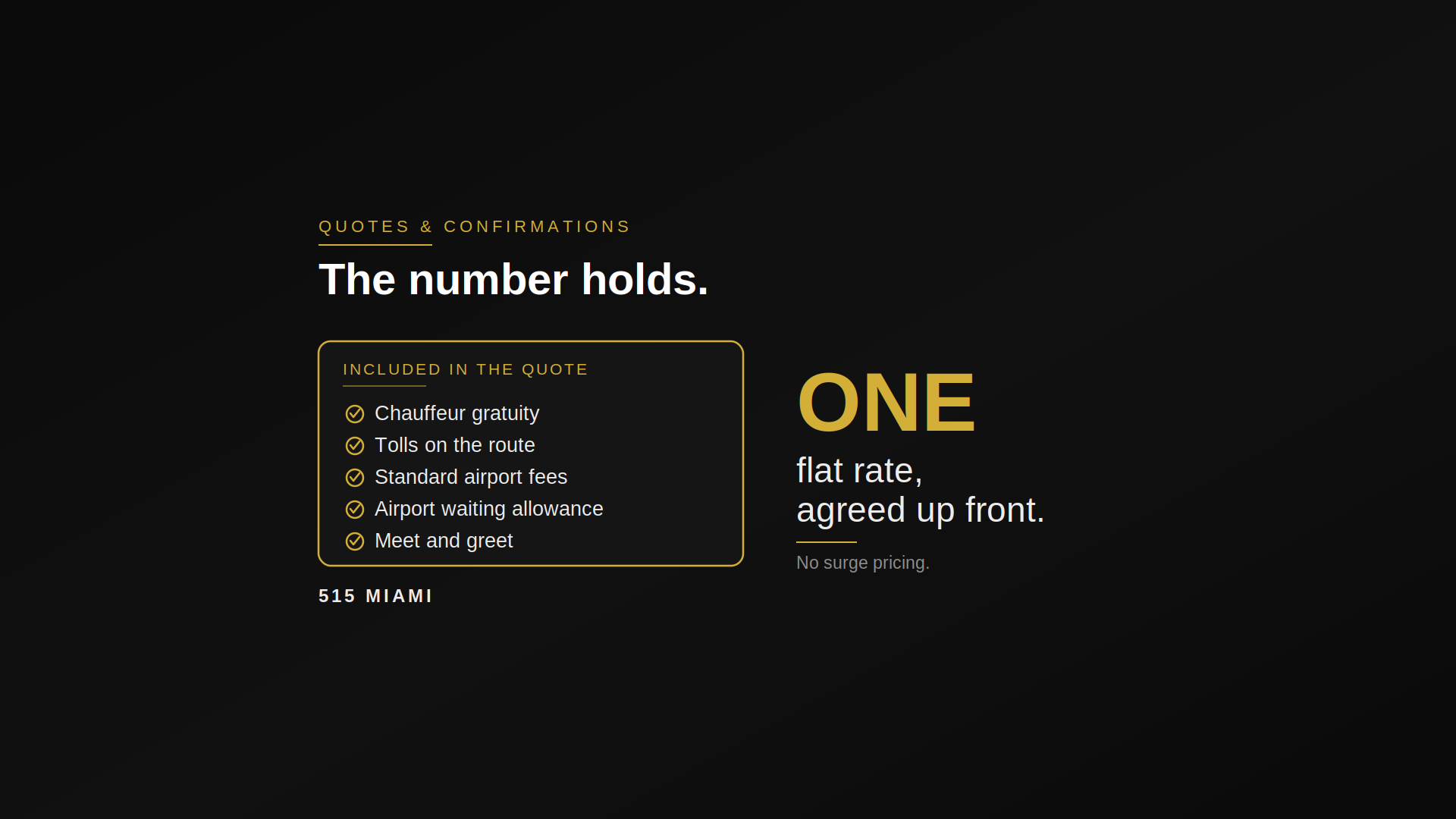
With a flight-tracked booking, the pickup moves with the aircraft instead of staying pinned to the time you guessed at. On our airport transfers, quoted rates include a grace period measured from touchdown:
- 60 minutes on international arrivals
- 40 minutes on domestic arrivals
- 30 minutes at private aviation terminals
Past the grace period, additional time bills in 30-minute increments. The point of publishing those numbers is that you can compare them. "We track your flight" is a claim every operator makes; the included minutes are the part that is actually a commitment.
Scenario three: you are diverted
Rare, and the one that genuinely breaks things. At 0.34% of operations you will probably go years without one, and then it will happen on the trip that mattered.
A diversion means you land somewhere you did not book. A Miami arrival goes into Fort Lauderdale, or Orlando, or Tampa. From there the outcomes vary: the flight refuels and continues, or the airline buses passengers, or everyone waits, or the crew times out and the day ends where it landed.
This is the scenario an app cannot solve, and the reason is structural rather than technological. Your booking exists at the wrong airport. There is no button for "I am now 200 miles away." A dispatcher can re-quote to the new airport, send a vehicle to meet a bus, or hold the reservation until the situation resolves — because a human is holding the reservation rather than an algorithm matching a request.
Practical advice: message dispatch the moment the captain announces the diversion, not after you land. That announcement is usually the earliest anyone on the ground knows, and it buys the most useful thirty minutes in the whole process.
The clock that matters is the curb clock
Tracking tells you when the aircraft arrives. It does not tell you when you arrive, and the gap between those is where most airport pickups actually go wrong.
Between the gate and the curb sits deplaning, possibly immigration, possibly a customs hall, and the baggage belt. On an international arrival at Miami International that stretch can run 45 minutes or more on a bad afternoon, and it varies enormously by hour and by concourse. If you are landing at MIA and are not sure where you will physically emerge, our terminal-by-terminal pickup guide covers which level each concourse puts you on — including the Concourse J arrivals that exit two levels above ground transportation.
Good dispatch treats gate arrival as the start of a countdown, not the pickup moment. A chauffeur staged too early is a parking problem; staged too late is a waiting passenger.
Commercial arrivals and FBO arrivals are tracked differently
On a commercial arrival the flight number is the anchor, the passenger clears a terminal, and the variable is how long the building takes.
Private aviation runs on different inputs. The anchor is the tail number and the FBO, the passenger walks off the ramp into a lounge rather than an immigration queue, and the elapsed time from wheels-down to vehicle is short — often only a few minutes. That is why the included grace period at an FBO is 30 minutes rather than 60: there is far less building between the aircraft and the car. The trade-off is that timing is tighter and the FBO name matters more than the airport name, which we cover in private aviation ground transportation.
What to give us when you book
Most tracking failures are information failures, and all of them are fixable the day before.
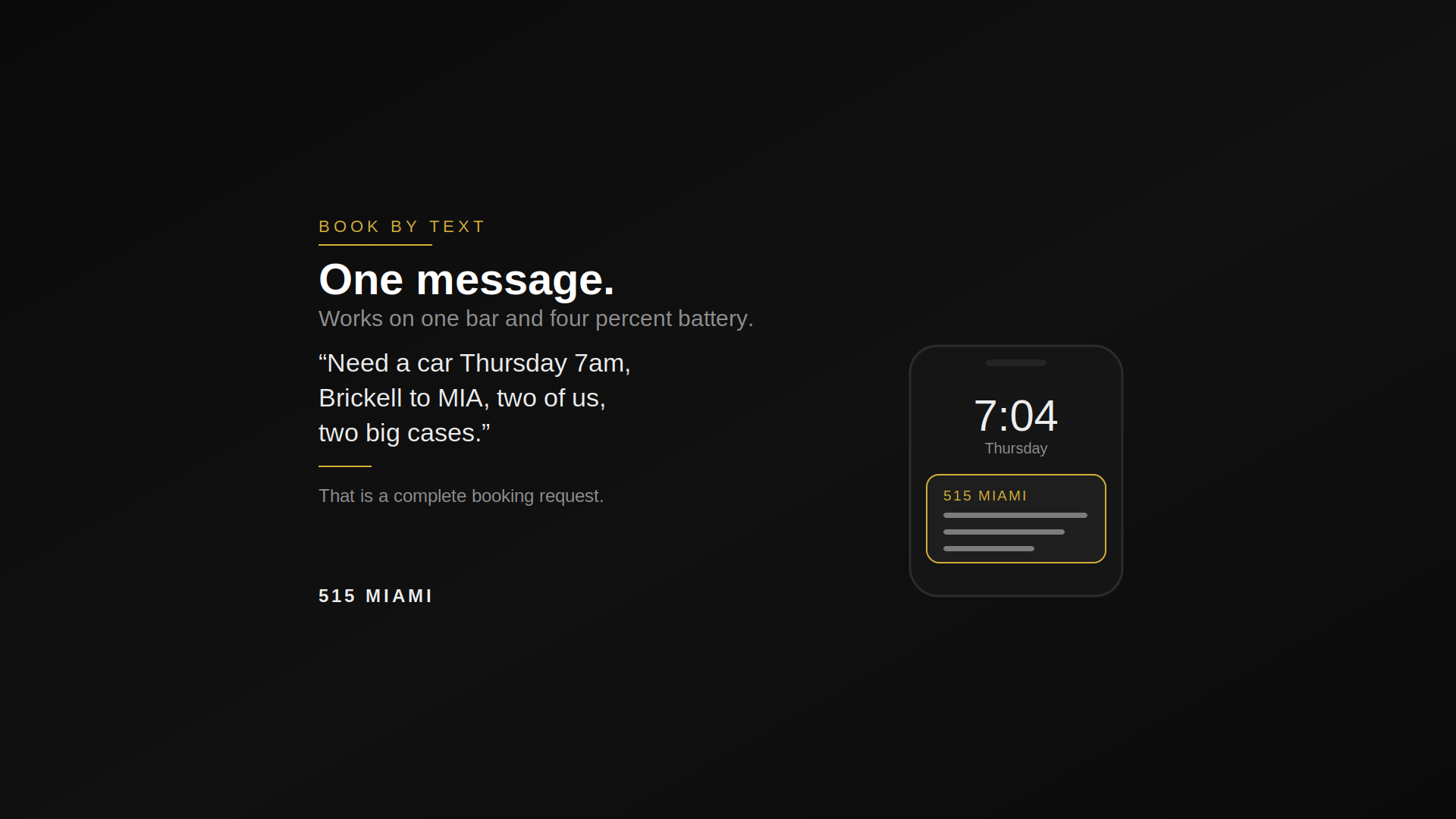
Send the flight number rather than a landing time. Send a phone number that works when you land — an international mobile with no roaming plan is the single most common reason a chauffeur and a passenger lose each other. Send an honest bag count, because that decides the vehicle. If you are flying privately, send the FBO name and tail number. And if any of it changes at the gate, send that too: a two-minute message beats twenty minutes of standing at the wrong curb.
Questions worth asking any operator
"Do you track flights?" is not a useful question, because everyone says yes. These four separate the answers.
How much wait time is included, and from when? From touchdown, or from the scheduled time? The difference is the entire value of tracking.
What happens after the grace period? Billed in what increments, at what rate.
Who watches it? An automated alert, or a dispatcher who can act on it.
What is your diversion procedure? Most operators have never been asked. The answer tells you whether anyone has thought past the easy case.
Common questions
Do chauffeurs track flight delays?
A professional chauffeur service does, using your flight number rather than the pickup time you entered. Dispatch sees the revised arrival estimate while you are still airborne and moves the pickup with the aircraft. The meaningful difference between operators is not whether they track, but how much wait time is included and whether a person is watching.
What happens if my flight lands early?
Tracking picks up the revised estimate before you land, so dispatch can reposition the vehicle rather than learning about it when you call from the curb. Worth knowing: an early aircraft sometimes holds on the ramp waiting for its gate, so being on the ground early does not always mean being off the plane early.
What happens if my flight is diverted?
Contact dispatch as soon as the diversion is announced. Depending on the outcome, the reservation can be re-quoted to the new airport, redirected to meet a bus, or held until the airline resolves it. Diversions are the one scenario an app cannot handle, because the booking exists at an airport you are no longer flying to.
How much free wait time is included on an airport pickup?
Our quoted rates include 60 minutes from touchdown on international arrivals, 40 minutes on domestic arrivals, and 30 minutes at private aviation terminals. Beyond that, additional time bills in 30-minute increments.
Is "on time" measured at landing or at the gate?
At the gate. The Bureau of Transportation Statistics counts a flight as on time if it arrives at the gate less than 15 minutes after its scheduled time. Neither the wheels-down moment nor your arrival at the curb is what the statistic measures.
Do I need to call when I land?
No. A flight-tracked booking already knows. A message helps in two situations: if something changed that tracking cannot see, such as a gate-side rebooking, and if you clear the terminal much faster or slower than typical.
Sources
- US Bureau of Transportation Statistics, Airline On-Time Performance and Causes of Flight Delays (accessed August 2026)
- US Department of Transportation, Air Travel Consumer Report, March 2026 data (on-time arrivals 73.4%, cancellations 2.9%, 2,317 diversions / 0.34% of operations)
On-time, cancellation and diversion rates move month to month and by carrier and airport. The figures above are the most recent published at the time of writing.
Need a chauffeur in South Florida?
Airport transfers, corporate travel, cruise ports, and events — with flight tracking and chauffeurs who arrive early. Available 24/7 across Miami, Fort Lauderdale, and Palm Beach.