How to Arrange Executive Travel Without Gaps

A missed pickup rarely looks like a transportation problem at first. It looks like an executive arriving late to a board meeting, a client left waiting at an FBO, or a leadership team losing the only workable window between a flight and a dinner reservation. Learning how to arrange executive travel means designing the trip around those moments before they become failures.
For executive travelers, the vehicle is only one part of the service. The real product is certainty: the right chauffeur, the correct pickup protocol, enough time for traffic and security, and a clear plan when the itinerary moves. This is especially relevant in South Florida, where airport congestion, bridge traffic, major events, cruise schedules, and private aviation procedures can change the practical timing of a trip.
Start With the Executive's Actual Schedule
Do not build transportation around flight times alone. Build it around the full working itinerary. An executive may need a quiet transfer to take calls, a hotel arrival timed for a quick change before a meeting, or a vehicle waiting through a dinner where the end time is uncertain. Each scenario calls for a different reservation structure.
For a straightforward airport transfer, collect the flight number, arrival airport, airline, date, passenger count, luggage profile, and final destination. Flight information allows the transportation team to track delays and early arrivals rather than relying on a passenger to send updates while in the air. The destination matters just as much as the airport. A transfer from Miami International Airport to Brickell requires a different buffer than a transfer to Boca Raton, Palm Beach, or a resort during a high-traffic weekend.
For a multi-stop day, identify the fixed appointments first, then map the flexible portions around them. Include meeting addresses, expected release times, private club or hotel access instructions, and the preferred pickup point at each location. An hourly chauffeur arrangement is often the better choice when the schedule includes several stops, uncertain end times, or a need to keep belongings secured in the vehicle between meetings.
The key question is not simply, “What time should the car arrive?” It is, “What would happen if this leg runs 20 minutes late?” If the answer is a missed flight, an investor waiting curbside, or an executive navigating an unfamiliar terminal alone, schedule more protection into the plan.
Choose the Vehicle for the Work of the Trip
Executive travel is not improved by ordering the largest vehicle available. It is improved by matching the vehicle to the passengers, luggage, setting, and amount of time spent on the road.
An executive sedan is appropriate for one or two travelers with standard luggage, particularly for airport transfers or direct meetings. A luxury SUV provides more room for additional passengers, golf clubs, trade-show materials, or several large suitcases. It can also be the more practical choice when a senior executive travels with an assistant or security professional.
For teams, the decision becomes more operational. A Mercedes Sprinter van may fit a small executive group traveling together, while a larger van or motorcoach may be necessary for a conference delegation, wedding party, or corporate event. Confirm luggage separately from seating capacity. A vehicle that technically seats every passenger may not comfortably hold their bags, garment cases, presentation materials, or equipment.
Privacy is also part of vehicle selection. A principal traveling between consecutive calls may need a quiet cabin and a chauffeur who understands that conversation in the back seat is confidential. A client pickup may call for a more formal arrival experience. Neither choice is about excess. Both are about using the vehicle as an extension of the traveler’s professional environment.
How to Arrange Executive Travel for Airport Arrivals
Airport arrivals demand more detail than most reservations receive. Start by determining whether the traveler should be met curbside, inside the terminal, or at a private aviation facility. The right answer depends on the traveler’s preferences, the airport, baggage needs, mobility considerations, and the level of hosting required.
A curbside pickup can work well for an experienced traveler carrying minimal luggage. A meet-and-greet is stronger when a guest is visiting for the first time, traveling internationally, managing several bags, or arriving after a long flight. The chauffeur or assigned greeter can provide a clear point of contact and guide the traveler from the terminal to the vehicle without an uncertain search through a crowded pickup area.
Private aviation requires its own coordination. Give the transportation provider the FBO name, tail number if available, estimated arrival time, passenger count, and any special access instructions. Flight plans can change quickly, so the provider should monitor arrival information and coordinate directly with the FBO when appropriate. The objective is simple: the vehicle is positioned and ready when the aircraft door opens, not dispatched after the wheels touch down.
For departures, work backward from the required arrival time at the terminal or FBO. Factor in airline check-in requirements, security, international travel, checked luggage, and the realistic drive time from the pickup address. A suggested travel time from a mapping app may not account for event traffic, accidents, weather, or terminal road congestion. A professional transportation plan does.
Give One Person Authority Over Changes
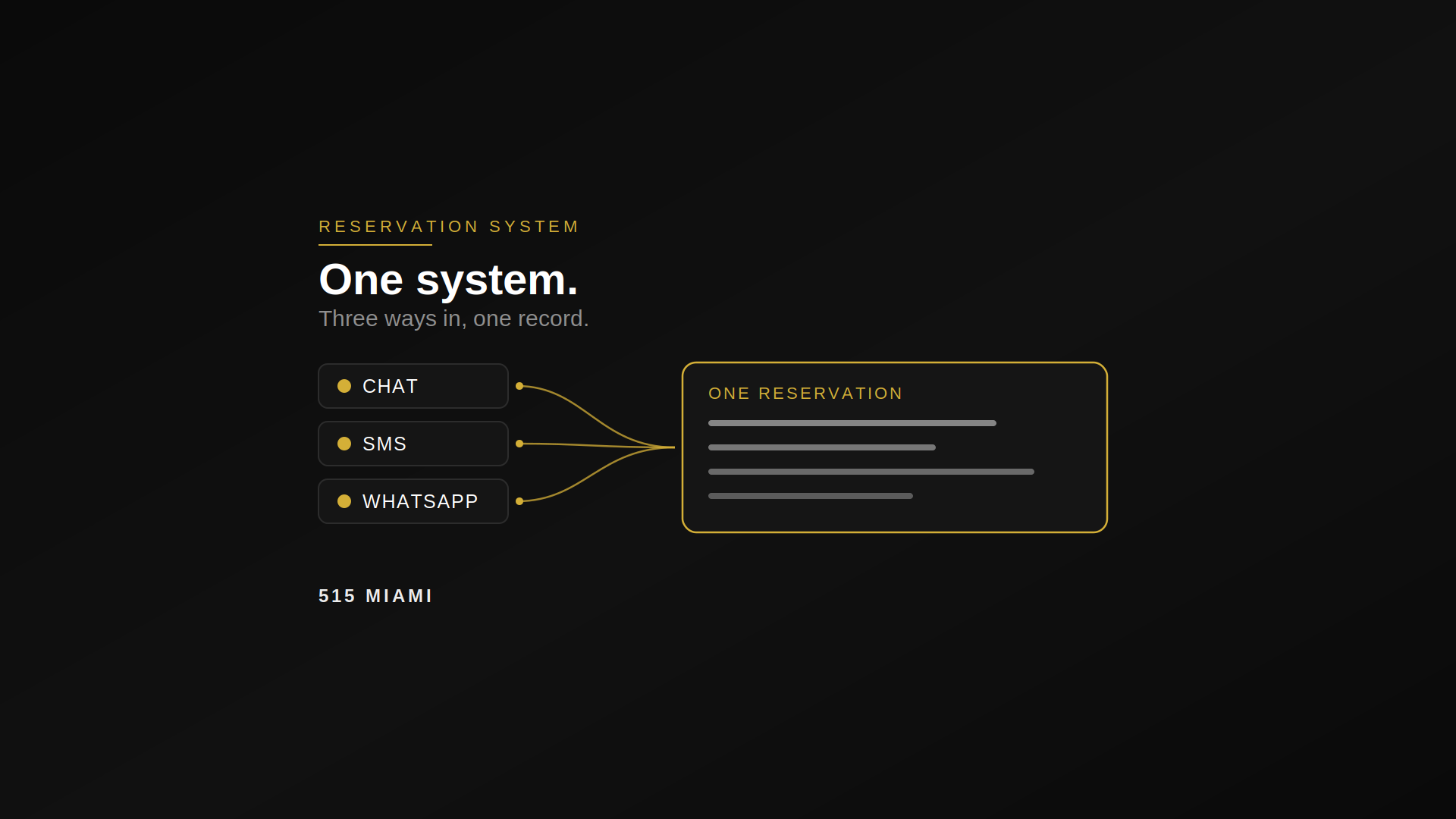
Travel plans often fail because everyone has partial information. The executive’s office has the flight details, an assistant has the restaurant reservation, the event team has the hotel entrance instructions, and the traveler makes an unannounced change from the plane. A reliable plan needs one source of truth.
Before the trip, designate a primary contact who can approve adjustments, receive status updates, and provide a rapid decision if the itinerary changes. This may be an executive assistant, travel coordinator, family office representative, or event lead. The traveler should not have to manage a transportation issue while preparing for a meeting or clearing customs.
Share a concise operational brief with the chauffeur service: passenger names, mobile numbers when authorized, flight details, pickup and drop-off locations, timing, luggage, vehicle preference, and any special requests. Mention security protocols, child seats, accessibility needs, signage requirements, or confidentiality expectations in advance. A note that says “VIP” is not operationally useful. A note that specifies “meet principal inside arrivals with name sign; assistant will arrive separately; two checked bags and one garment bag” is useful.
Build a Contingency Plan Before You Need It
The best executive transportation service is judged most clearly when the original plan changes. Flights divert. Meetings extend. A guest asks to add a stop. Heavy rain slows airport exits. The response should be deliberate, not improvised.
For critical itineraries, confirm what happens if the flight is delayed, the traveler arrives early, or the original vehicle is no longer the right fit. Ask whether live flight tracking is used, how dispatch communicates with chauffeurs, and whether the provider has sufficient fleet depth to handle adjustments. Direct operators with in-house maintenance and coordinated dispatch generally have more control than services that simply pass a reservation to an unknown third party.
It also helps to decide in advance which parts of the itinerary are fixed and which can move. A flight departure is fixed. A lunch reservation may be adjustable. A board meeting may permit a virtual check-in from the vehicle if privacy and connectivity allow. These distinctions help a transportation team prioritize correctly during a disruption.
Do not overbuild every itinerary, however. Excessive buffers can create wasted time and unnecessary hourly charges. The appropriate margin depends on the stakes, the route, the time of day, and the traveler’s tolerance for risk. A routine transfer on a quiet weekday is different from a CEO arrival during a major convention or an international departure on a holiday weekend.
Evaluate the Chauffeur Service, Not Just the Quote
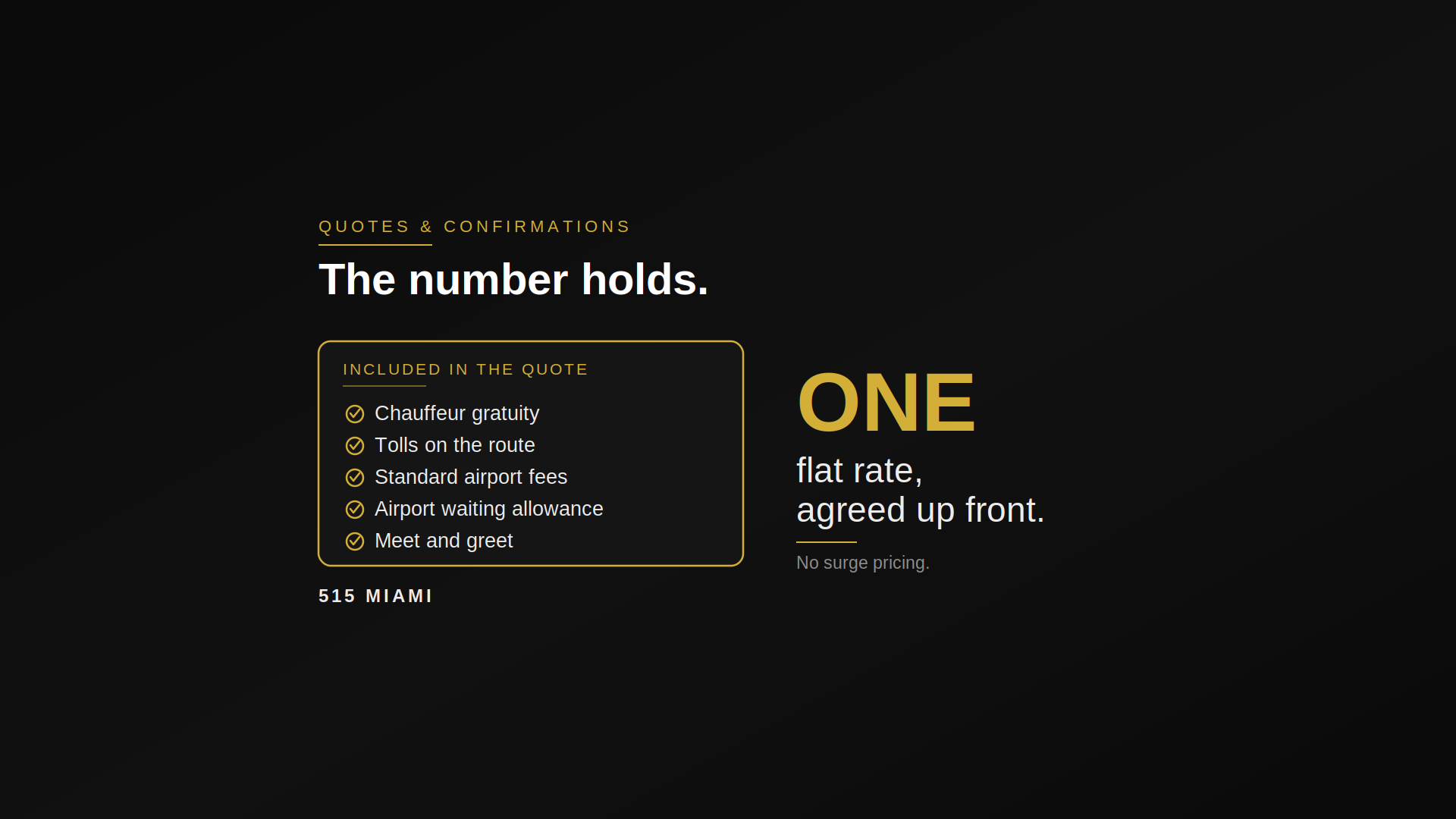
A low quote can conceal a high operational risk. Executive travel requires licensed, insured chauffeurs, professionally maintained vehicles, accurate dispatch, and a clear person to contact when plans change. It also requires chauffeurs who understand when to assist and when to remain discreet.
Ask practical questions before confirming a provider. Who monitors the flight? Is meet-and-greet available? Will the reservation be handled directly or brokered out? What is the procedure for after-hours changes? Can the company support both the principal and a larger group if the itinerary expands? The answers reveal whether the service is prepared for executive travel or simply equipped to provide a ride.
For travelers moving through Miami and South Florida, 515 MIAMI operates as a private transportation network with executive sedans, luxury SUVs, Sprinters, and larger group options under one service standard. That scale is valuable when a single itinerary includes an airport arrival, an executive transfer, and a team movement later in the day.
The strongest travel arrangements feel quiet from the passenger’s perspective. The chauffeur is ready, the route is considered, the vehicle fits the assignment, and changes are handled without creating a new task for the executive. Arrange the details with that standard in mind, and the traveler can give attention to the reason for the trip rather than the mechanics of getting there.
Need a chauffeur in South Florida?
Airport transfers, corporate travel, cruise ports, and events — with flight tracking and chauffeurs who arrive early. Available 24/7 across Miami, Fort Lauderdale, and Palm Beach.