Event Shuttle Logistics Guide for Large Groups
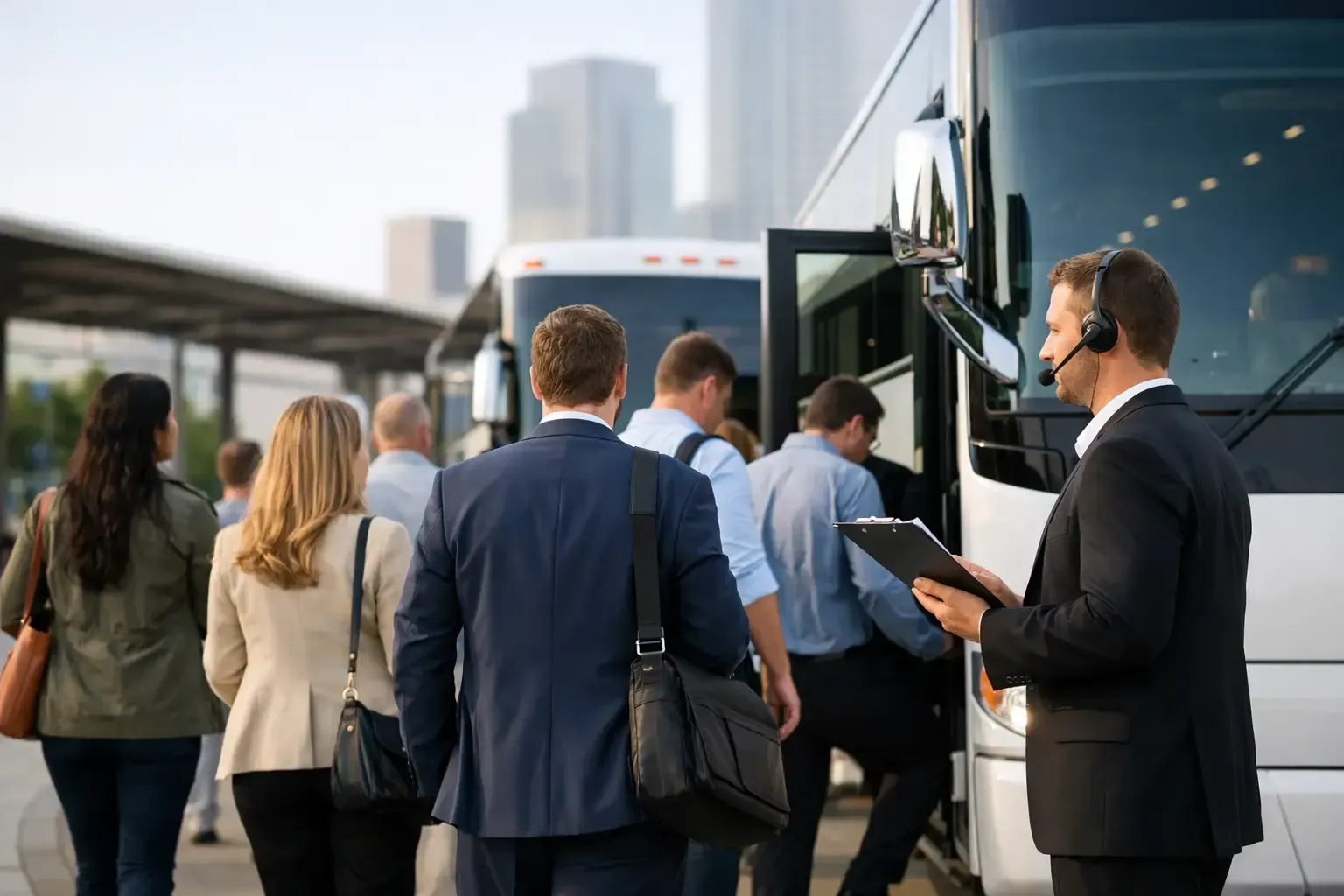
A successful arrival is rarely accidental. When hundreds of guests reach a hotel ballroom, waterfront venue, stadium suite, or private event within the same 30-minute window, transportation becomes part of the guest experience. This event shuttle logistics guide explains how to plan that experience with the control, capacity, and clear communication that large groups require.
Start With the Movement, Not the Vehicle
The most common planning mistake is selecting vehicles before defining the actual movement of people. A 56-passenger motorcoach may appear efficient on paper, but it is not always the right answer for a venue with limited curb access, narrow service roads, or staggered guest arrivals. Conversely, a collection of SUVs may look premium but create unnecessary congestion when 150 attendees must move at once.
Begin with four operational questions: Where are guests starting, where are they going, when must they arrive, and what restrictions exist at each location? The answers shape every decision that follows.
For a corporate dinner, the primary concern may be moving guests from several hotels to one venue with a firm reception start time. For a wedding, the priority may be keeping the wedding party separate from general guest transportation while protecting photo and ceremony timing. For a conference, the challenge often becomes repeated loops between hotels, a convention center, off-site dinners, and airport departures.
A transportation plan should account for the full guest journey, not merely the first departure. That includes curbside waiting, boarding, luggage handling, traffic delays, accessibility needs, post-event pickup, and the moment guests realize they are at the wrong entrance.
Build the Event Shuttle Logistics Plan Around Demand
Passenger count is the starting point, but not the final number. Ask who is actually expected to use transportation. An invitation list of 250 does not automatically mean 250 shuttle passengers. Some guests may drive, arrive from different hotels, join late, or leave early.
Estimate ridership by pickup location and time block. Then add a practical contingency for late confirmations, companions, staff, VIPs, and last-minute itinerary changes. For high-stakes events, planning only for the expected count leaves no margin when an additional group appears at the curb.
Calculate Capacity by Seats, Luggage, and Timing
Seating capacity matters, but so does what each guest brings aboard. Airport transfers, cruise transfers, and hotel changes require a different vehicle calculation than a short ride from a resort to a gala. A Sprinter van may be ideal for executive groups and smaller wedding parties, yet luggage volume can reduce its workable passenger count. Motorcoaches provide scale for large groups, but their loading time, turning radius, and venue access must be confirmed in advance.
The right fleet mix often combines vehicle types. Executive sedans and luxury SUVs can serve principals, speakers, or private aviation arrivals. Mercedes Sprinter vans can cover smaller hotel routes or VIP groups. Motorcoaches can handle broad guest movement on a defined schedule. This approach preserves a premium standard without sending oversized vehicles where they cannot operate efficiently.
Timing deserves the same discipline. If a venue expects guests by 7:00 p.m., the last scheduled vehicle should not arrive at 7:00 p.m. Allow time for unloading, security, registration, elevators, and a walk through the property. In South Florida, add realistic buffers for bridge traffic, weather, event congestion, and restricted access around major hotels, arenas, and waterfront venues.
Confirm Routes, Staging, and Venue Access Early
A route that works on a map can fail at the curb. Event transportation requires direct coordination with hotels, venues, security teams, valet managers, and, when relevant, police detail or property management. Each party may control a different portion of the arrival process.
Confirm exactly where vehicles may stage, load, unload, and wait between runs. Determine whether buses are permitted to idle, whether curbside space is shared with valet operations, and whether there are separate entrances for guests, vendors, and VIPs. A hotel may allow a Sprinter at its front drive but direct a motorcoach to a designated loading area several minutes away.
For major events, a site inspection is often worthwhile. It identifies tight turns, low clearances, loading conflicts, pedestrian crossings, and the practical distance between the vehicle drop-off and the event entrance. It also gives the transportation team an opportunity to establish a single on-site point of contact.
Create a Staging Plan for Peak Moments
Peak demand is where otherwise strong plans break down. The most sensitive periods are usually the first guest arrival, the conclusion of a program, and the final departure after an evening event. If all vehicles arrive at the same curb at once, guests may face blocked access and drivers may lose the order of departure.
A proper staging plan assigns vehicles to a holding area and releases them in sequence. It defines which vehicle loads first, where the next vehicle waits, who communicates with chauffeurs, and what happens when a guest count exceeds the planned capacity. This is particularly valuable at nightlife venues, cruise terminals, and busy hotel districts where curb space is scarce.
Give Guests Clear, Simple Instructions
Guests should not have to search through a long email thread to find their pickup instructions. Provide the essentials in one place: pickup location, departure window, vehicle description if useful, contact method, and what happens if they miss the scheduled departure.
The language should be specific. “Lobby pickup” is vague in a large resort with multiple towers and entrances. “Meet at the east lobby porte cochere, adjacent to valet, between 6:15 and 6:25 p.m.” gives guests a usable instruction. For airport or FBO arrivals, include whether guests will meet a chauffeur inside, curbside, or at a designated private aviation terminal point.
A group transportation plan also needs an escalation path. Guests may arrive on an earlier flight, miss a shuttle, or need to leave before the event ends. The organizer and transportation provider should agree in advance on who can authorize changes and how those requests will be handled. Without that protocol, a small exception can disrupt the planned schedule.
Run Transportation Like an Operating Schedule
The event day should be managed through a detailed manifest, not memory. Every trip needs an assigned vehicle, chauffeur, route, passenger estimate, departure time, and arrival target. For multi-day programs, track changes by date and keep version control tight so drivers and event staff are working from the same schedule.
A polished operation also distinguishes between guest-facing time and chauffeur report time. Chauffeurs should be positioned before the first guest is expected, not dispatched at the published pickup time. Vehicle readiness, presentation, fuel level, climate control, and communications should be handled before boarding begins.
For airport-driven events, real-time flight tracking is essential. A fixed schedule cannot account for early landings, gate changes, diversions, or delayed baggage. For private aviation clients, FBO coordination is equally important, since aircraft timing and ramp procedures may change with little notice.
During the event, one operations lead should have authority to adjust vehicle order, activate backup capacity, and communicate status to the organizer. That person needs current visibility into traffic, vehicle location, guest count, and venue conditions. This is where a reservation-based transportation partner delivers more value than a collection of independently booked rides.
Protect the Departure Experience
The end of an event is not the time to improvise. Guests leave at different speeds, weather can change the curbside environment, and a single delayed vehicle can make a well-executed evening feel disorganized. Plan departures in waves where possible, with clear signage or event staff directing guests to the correct loading point.
For formal events, separate transport for hosts, VIPs, and general attendees may be appropriate. For conferences, the final departure schedule should reflect actual programming rather than an optimistic agenda. If a keynote runs long, transportation must adjust without leaving guests waiting on the curb.
A premium transportation plan is measured by how little guests need to think about it. At 515 MIAMI, that means matching a luxury fleet to the practical demands of the route, venue, and schedule, then managing the details behind the scenes. When vehicles are staged correctly, chauffeurs are ready, and guests know where to go, the transportation feels effortless because the logistics were anything but.
Need a chauffeur in South Florida?
Airport transfers, corporate travel, cruise ports, and events — with flight tracking and chauffeurs who arrive early. Available 24/7 across Miami, Fort Lauderdale, and Palm Beach.